
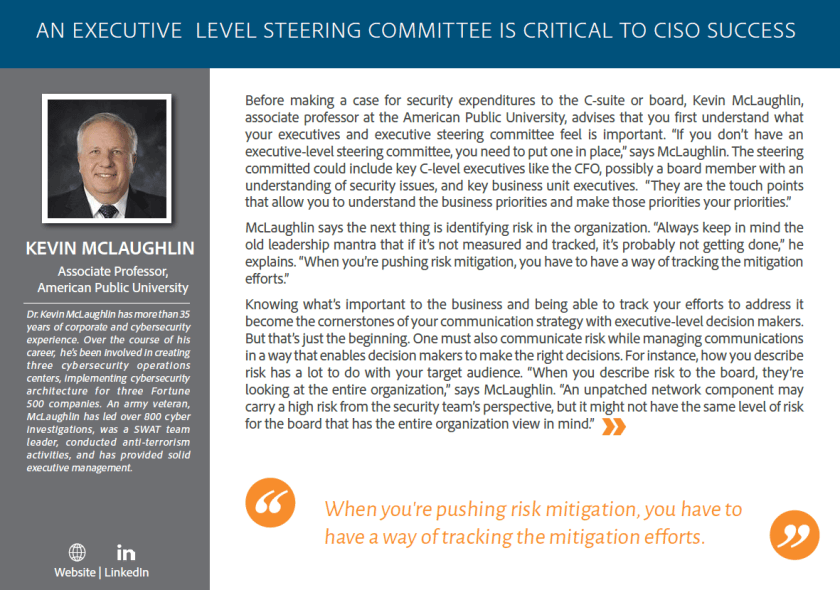
Tag: Policy
The Insider Threat is Alive and Well – a summary taken directly from Raytheon’s How to Build an Insider Threat Program (2014) …
Aspects of human nature further complicate matters: Well-intended managers resist any notions of “their people” doing “bad things.” They screened them. They hired them. They work with them side-by-side and – if they’re good bosses – have developed a genuine interest in their career development and even personal happiness. In addition, one of the most critical elements in building a high performing team is trust, so anything tha t can have a negative impact on that trust needs to be very carefully analyzed and explained before being implemented. This disposition is not about being gullible, we all have white hat syndrome at times. It’s about being a helpful manager – and a decent person.
But it would be imprudent to completely abandon a sense of cautionary oversight, as there has been a steady flow of news reports about insiders doing harm to their organizations. They range from probably the most notorious of incidents – Edward Snowden’s carefully plotted leaking of sensitive NSA documents after downloading 1.7 million files – to possibly the funniest (except for the company in question): A software developer for a U.S. critical-infrastructure company literally outsourced his job by sending his log-in credentials to a Chinese contractor, so he could get paid six figures to surf Reddit, post Facebook updates, shop on eBay and watch cat videos all day2. While the latter anecdote has generated considerable amusement, it underscores the reality that internal threats pose serious risks: 53% of organizations have experienced an insider cybercrime incident, according to the 2013 U.S. State of Cybercrime Survey from the CERT Insider Threat Center at the Carnegie Mellon University. So who are the users who pose threats? In all cases, they have authorized access to the network and their co-workers and managers are usually shocked that they would do such a thing. Clearly, tech departments need the support of their leadership to do what plant managers and foremen did in the 1950s: Watch. Audit. Intervene. Prevent.
Regardless of the user’s full time or contractual status, you want to look for classic “tip-off” behaviors which can lead to trouble, e.g. the clear taking of proprietary information  without need or approval; expressing increased interest in matters unrelated to defined duties; and connecting to the network remotely from unusual places at unusual times, having access to machines that they really don’t need access to, constantly seeking for elevated privileges, to list a few examples from the FBI profiling studies. Without a program in place to stop these individuals, organizations stand to lose an estimated $412,000 on average per incident.
In many organizations, a “we trust everyone to do the right thing” mindset too often prevails, and data points abound, such as 50% of employees who leave a company admitting to taking proprietary data, to show why this is highly questionable logic.
Another issue is with internal rule benders who conclude that the added layer of protections are either unnecessary and/or overly alarmist and/or present too many inconveniences for them to deal with. They consider themselves and their work as above it all, and decide on their own as to when to follow security protocols – and when to circumvent them. As they grow more comfortable with the latter, they choose it as their “default” setting, doing things such as sending proprietary information outside the company “walls” without encryption, logging onto systems that they should not have access to, elevating other person’s access rights because security doesn’t understand the person’s real need, etc. They love external drives and USB sticks, because these tools make it nearly impossible to distinguish risky behavior from harmless, work-related shortcuts. In fact according to a recent survey conducted by Voltage Security 50% of network users admitted to having bypassed security controls to complete a task more quickly and easily. Internal Rule Benders make up 15% of treat actors who have caused or committed a breach of their organizations’ data. Senior executives are disinclined to acknowledge that the worst is, indeed, possible: “We trust the people we hire” and they perform a valuable role. We do not want to promote a culture of suspicion. These Senior executives need to realize that Trust but Verify is a good mantra for them to start living by.
 It’s too difficult. It’s too costly. There’s no imminent crisis. “Status quo” is working out just fine. Then like, Target, Home Depot and many others they find out that it’s not, after it’s too late.
On our team how can we implement items that allow us to do the following?
- CERT’s “Common Sense Guide to Mitigating Insider Threats” has emerged as an industry standard for program implementation. Among its recommended actions:
- Launching a security information and event management (SIEM) system to log, monitor and audit user activity.
- Detecting activities outside the users’ normal scope of duties via phone/network logs, etc.
- Regularly reviewing accounts to verify that all are still active and necessary.
- Ongoing auditing of user accounts created and passwords provided.
- Requiring all system administrators to change passwords when a fellow administrator leaves his or her job.*
- Monitoring and controlling remote access from all end points, including mobile devices.
- Incorporating threat awareness/prevention policies into comprehensive termination policies.
- Developing a baseline of “normal” network device behaviors.
- Inventorying IT assets and routinely assessing their present-day role and relevancy.
Remember:
If you don’t go looking for trouble you will never find it.
But, Trouble will find you / your Organization
How do we get back to this future in a technological workplace?
In the classic factory of the 1950s, managers strolled from their offices on a floor that towered over plant activity, closely observing whether shift crews below were doing what they were supposed to do. Because employees knew the eyes of a supervisor may be upon them at any time, they were less inclined to cheat the system – such as slipping any of the company’s property or product into their pockets, or sabotaging a machine out of spite. Thus, the business was protected. And what was good for the business was good for everyone involved: the bosses, the investors and, yes, the workers. Said another way, it is good for business and for organizations to keep one rotten apple from spoiling the bunch.

A Myth of Information Security: All data needs to be protected!
When you think about the total amount of data that goes across an organization on a daily basis protecting all of it becomes a daunting, if not impossible, task. It is hard to wrap one’s mind around how much a gigabyte of data is, let alone trying to conceptually understand what a terabyte of data is! It seems that current regulatory requirements and Information Security professionals are saying that all this data needs to be protected? Not true… that is a myth generated to scare the masses! For most business units and organizations the reality is that only 5-10% of the data that transverses their infrastructure or sits within electronic and physical filing cabinets is sensitive enough to need protection.
How do we differentiate between data that needs to be protected and data that does not need protected? One answer is for us to embrace an enterprise wide data classification scheme that allows the owner of the data to decide which of their data should be treated as:
- Highly Restricted
- Sensitive
- Public
Once data owners classify their data they can then make smart choices about which data to protect very tightly and which data not to protect as well. This also allows the site data owners to save money by purchasing tools or establishing business processes that protect the 5-10% of data that requires extra protection vs. trying to protect 100% of the data flowing through their work areas.
By focusing on the small amount (5-10%) of data that truly needs to be protected we can lessen the complexity and obtrusiveness of data protection and regulatory compliance while reducing the cost of people, time and dollars. This reduced focus and scope is beneficial to the organization’s bottom line.
Yes, there is certain data that we are legally required to protect and secure and doing so can require small sacrifices and inconveniences on our part, similar to having to wear a seat belt when driving a car. However, if we focus our attention and tightened security on the small percentage of data that needs to be protected we might actually find out that there really is such a thing as a cost effective Information Security program.
© Kevin L. McLaughlin, probably cited re-use is acceptable
Common Sense Requires No Policy
As a Senior Information Security professional I am often asked if we should have a policy that requires our Business Community members to do “X”. In many of these cases the person is asking for a policy to be written that says things like: Business Community members will adhere to the laws surrounding the safeguarding of regulated data or that Business Community members will not disclose a person’s private medical information to 3rd parties. Now, when asked a question that consists of what people in common would agree on, such as do I really have to follow the federal and state laws while at work, I have to wonder why we would want to implement a policy to tell people to follow their common sense. Really, shouldn’t a person’s common sense kick in and make them very aware that they are not allowed to break a law just because they are at work.
I am not saying we don’t need good solid security policies as I strongly believe that policies are absolutely necessary and required as a way to share with our community the behaviors expected of them in the protection of organizational data but these policies should:
- Cover topics and areas that are “gray” and that without a policy would require people to guess at the right thing to do
- Be written in such a manner that helps define what steps are necessary for our community members to show they are in compliance and showing due diligence in meeting the intent of applicable laws
- Be enforceable and worthy of being enforced
It is important for Business Community members to follow their common sense in fulfilling their every day duties and tasks, if they do so the courts have ruled that they are most likely not going to be held personally liable for security breaches or security issues that occur. In the InfoSec field we call this safety net the principles of “due diligence” or being “prudent” both of which are just other ways of saying making reasonable and common sense decisions. However, the courts have also ruled that failure to use common sense in the protection of data and the securing of an IT infrastructure is grounds for holding a person personally liable.
Companies are firing IT staff that have failed to use common sense decisions in the protection of data and securing the IT infrastructure they are responsible for. This makes it critical that in areas where it is not clear what approach constitutes common sense we protect our Business Community members by having policies in place that provide Business Community members with clear and concise instructions on what actions and activities they should or should not be doing. For example: If State Law requires that we protect SSNs we do not need a policy that says we have to protect SSN, the law already says that, but we may need a policy that describes ways of protecting SSNs such as using disk or file encryption, using a different type of identifier, database encryption of the field which stores the SSN, not storing or using an SSN in places where it is really not necessary to do so, etcetera.
Said another way, we should write policies that help non-security Business Community members understand what the common sense ways of protecting and safeguarding data look like. That’s just good Common Sense.
© Kevin L. McLaughlin, probably cited re-use is acceptable

