Coaching Big Kids the Right Way – Coach Kevin
Why Love and Care Keep Them in the Game
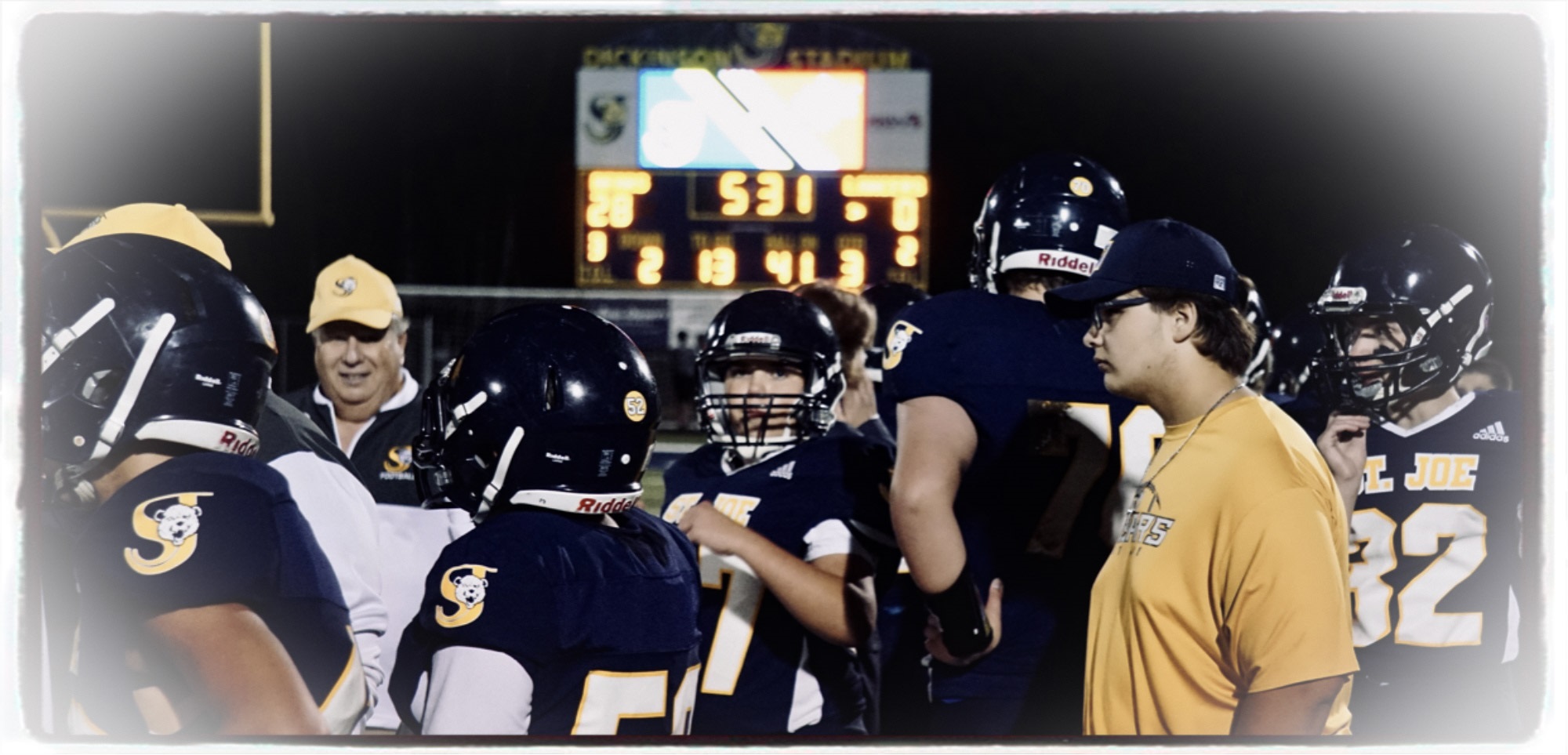
If you’ve coached youth football long enough, you’ve seen them, the big kids who come out early at eight, nine, or ten years old. They may not move like the speedy studs, but they carry a different kind of gift. Their size, their strength, their balance in a short square of ground, their ability to use quick feet and quick hands against a larger opponent, those are football skills just as valuable as breakaway speed. Too many youth tackle coaches make the mistake of treating these kids like they’re just slower versions of the fast athletes. They line them up for sprints, have them do drills built for running backs, then yell or ridicule them when they can’t keep up. That does damage. These players aren’t built for forty-yard races or for jumping up, getting off the ground quickly, and then hitting or tackling someone. Instead, have them stand up like they would in a game and teach them how to excel in real-world situations, using leverage, footwork, and technique in the spaces where their position truly operates. When we expect linemen to run like sprinters and then belittle them when they don’t, we drive them out of the sport. Some of the potentially best future varsity players, the anchors of offensive and defensive lines, quit football in elementary or middle school because no one saw their skill set for what it really was. Coaches focus too much on the flashy athletes who could run outside and score or cover the entire field.
The truth is that football needs all kinds of athletes. Speed and agility matter, but so do size, strength, footwork, and leverage. The big kid you’re frustrated with today might be the very player your high school program depends on in a few years. If you coach them with patience, belief, and care, you not only keep them in the sport, but you also give them the chance to grow into the kind of player every team needs.
Here’s the challenge for youth coaches:
- Stop comparing linemen to sprinters.
- Teach them their craft, hand placement, footwork, leverage, and short-area quickness.
- Celebrate their progress the same way you celebrate a running back’s touchdown.
- Never ridicule, belittle, or embarrass a kid for what they can’t do, coach them into what they can do.
Youth coaching isn’t about winning with the studs you already have. It’s about keeping kids in the sport long enough for them to grow, develop, and love the game. That’s how you build programs that last.
If you want more on this philosophy, check out my books on coaching and leadership, or explore the Coach Kevin GPT in the public GPT space, where I share coaching insights, leadership lessons, and practical advice to help you coach with heart, purpose, and impact.
Because in the end, every athlete matters.
From Flag to Tackle — Why Coaching Style Matters More Than Ever
Keeping Kids Excited About Football
Across the country, many youth coaches are sounding the alarm about flag football. They say flag is shrinking the numbers for tackle football. They point to lower sign-ups and fewer kids sticking with tackle after playing flag. Yet here’s the truth most don’t want to admit, the real problem isn’t flag football. The problem is how too many youth tackle programs are coached. Flag football is fun. Kids run, laugh, play with freedom, and leave practice excited to come back. That’s what gets them hooked on the game in the first place. Then, when those same kids make the jump to tackle, the experience often changes overnight. Instead of fun, they get screamed at. Instead of encouragement, they get called names. Instead of being celebrated for learning, they’re ridiculed for not being perfect.
I recently watched a tackle practice for 10-year-olds where the coach screamed for thirty minutes straight. He called three different kids idiots and left the whole group looking defeated. The next week, that same coach complained because six players had quit and gone back to flag. He didn’t connect the dots. It wasn’t flag football that pulled them away. It was his coaching. This is the wake-up call youth football needs. Kids aren’t leaving or never starting because of flag football. They’re leaving because tackle stops being fun. They’re leaving because some youth coaches forget they’re working with children who want to enjoy the game, not endure it.
Here’s what youth tackle coaches need to remember:
- Kids come to football for joy, belonging, and excitement, not misery.
- Encouragement keeps kids in the sport far longer than constant yelling.
- Respect matters — never call a child an idiot, ever.
- Fun and fundamentals go hand-in-hand if you coach with patience.
If we want to build strong tackle programs that last, we need to train our youth coaches to coach with care, energy, and purpose. That doesn’t mean lowering standards. It means raising the way we lead. Positive coaching creates retention. Retention creates stronger programs. Strong programs build the future of football. Let’s stop blaming flag football. Let’s start coaching tackle in a way that makes kids want to stay.
For more on how to coach with impact, check out my books on youth sports leadership and the Coach Kevin GPT in the public GPT space, where I share coaching insights, leadership lessons, and practical tools for coaches who want to do it right.
Because every kid matters.
Every Athlete Can Be a Leader
Why Coaches Must Teach Leadership, Not Just Plays
One of the biggest myths in youth sports is that leadership is reserved for a few, the oldest kids, the captains, or the ones who score the most points. The truth is that every athlete can be a leader. Every player on your roster has influence. The question is whether we, as coaches, are teaching them how to use it in a positive way. Too many youth coaches hold onto the idea that being an adult automatically makes them the expert, the only voice that matters. Here is the reality, kids listen differently to their peers. Culture is not built by one person barking orders. Culture is built when the team itself learns to lead, support, and hold one another accountable. That kind of culture does not just get results for a season, it lasts. It has become a legacy.
As coaches, our job is not just teaching skills. It is to create an environment where kids practice leadership every single day. That means letting a player lead warmups. Let a quieter kid call out encouragement during drills. Ask them how they think practice went. Give them a chance to own their role and influence the team. When you do that, you are not just coaching players, you are coaching future leaders.
Here is what youth coaches need to remember:
- Leadership is a skill, not a title. Every kid can learn it.
- Culture grows stronger when it is shared, one voice alone cannot carry a team for long.
- Respect goes both ways. Age or experience does not give you all the answers. Sometimes the best ideas come from the kids themselves.
- When players learn to lead on the field, they carry that confidence into the classroom, at home, and eventually into their careers.
Not Pollyanna, Just Real Development
This is not Pollyanna optimism. Some kids will find leadership easier, and some may never choose a front row role, yet every athlete can buy into the leadership model and help build the culture. Roles only reveal themselves when we let kids practice leadership. If no one gets a chance, there is no way to discover who will grow into primary leaders, who will thrive in key supporting roles, and who will buy in deeply and become the heartbeat of the program. Give them reps, give them language, give them space, then watch the culture take root. If we want programs that last, we need to move beyond the old model of coach talks, kids listen. We need to create programs where every athlete is seen as a leader in training. That is how you build a team that sticks together. That is how you create a culture that survives long after the scoreboard fades. Leadership is not about being the loudest or the oldest. It is about using your voice, your effort, and your influence to lift others. When coaches teach this early, we prepare kids not just for the game, but for life.
For more insight into building leaders at every level, check out my books on youth sports leadership and the Coach Kevin GPT in the public GPT space, where I share strategies for coaching with heart, energy, and purpose.
Every athlete matters, and every athlete can lead.
Parents, Trust the Process
How Buy In Today Builds Varsity Ready Athletes Tomorrow
Parents, your role is powerful. The habits you model at home, the words you choose after practice, and the way you support the staff shape how your child experiences the game. In our parent book, we start with this idea, know your why as a sports parent. If your why includes growth, character, and a chance for your child to love the sport for years, trusting the process is not a slogan, it is a strategy. Youth programs are the foundation. In many dynastic high school programs, the culture starts early. Kids learn the same language, the same standards, and the same simple routines that varsity expects later. Varsity success takes more than skills. It takes composure, communication, accountability, and the ability to fit your strengths into a system. Foundations are built in fifth, sixth, and seventh grade, then they harden in eighth and ninth.
Trusting the process is not blind faith
Trust is not pretending everything is perfect. Trust is alignment. Parents and coaches use the same values and the same language, so kids do not live in two playbooks. Skills grow faster when expectations match at home and at practice. Confidence grows when the message is steady, effort, attitude, and team first. There are many ways to teach a stance, a tackle, or a release, and many of those ways are not more right than the next one. The best way for your athlete is the way the team is teaching it right now. Alignment beats variety. When parents use the staff’s cues and reinforce the team’s technique, kids think less and play faster. When parents coach a different version from the stands or at home, even with good intentions, the mixed messages slow feet and cloud confidence.
I coached a promising linebacker a few years back, a true difference maker. He never bought into the system, since his dad coached him relentlessly from the stands and from videos at home. He struggled to adapt to the varsity program, while his dad continued to teach techniques that did not fit our system. He ended up a mediocre varsity player at best, without the foundation and understanding needed once the speed increased and everyone else caught up to his early advantages.
What varsity coaches notice, even in youth sports
- Athletes who show respect, listen the first time, and reset fast after mistakes
- Players who know the team language, simple cues, and how to fit their role
- Parents who support the standard, no drama, no sideline coaching
- Teams that care for their space and each other, clean gear, clean locker room, clean bus row
How parents can help the right way
Use the same language the staff uses
Ask for the key cues the coaches prefer. Use those words at home. One vocabulary, one standard, less confusion.
Praise controllables
Effort, eye contact, hustle between drills, and being a great teammate. Save the stat talk for later or skip it altogether.
Master the ride home
Keep it short and positive, then ask, what did you learn, where did you try your best, who did you encourage.
Align any private work
If your child trains outside the team, share the coach’s technique expectations with the trainer. Alignment beats noise.
Model respect
No ref bashing, no player comparisons, no coaches’ box play calling from the stands. Your calm becomes their calm.
Support the whole program
Volunteer where programs truly need help, filming games, cleaning and storing equipment after the season, tidying the press box, cleaning blocking pads, hanging locker signs before the season, checking the field for left behind gear. Consider organizing a yearly Clean the Field, Equipment, and Concession Stand day. That kind of help builds pride and frees coaches to coach.
What to avoid, even when it feels helpful
- Sideline coaching or hand signals during plays
- Re teaching footwork or technique that conflicts with the staff
- Comparing your child’s reps to another’s, especially by name
- Turning the ride home into a film session of every mistake
- Emailing in the heat of the moment, sleep on it, then use proper channels
Better questions to ask your coach
What cues should we use at home to match your teaching
What two habits would help my child earn more trust this month
How can we help the team off the field, so you and the staff can focus on coaching
Programs that last are built on aligned adults, steady language, and patient development. Your child will reach varsity facing faster athletes and more complex schemes. The separator will be maturity, coachability, and the ability to play inside a culture that expects selfless effort. Trusting the process today gives your athlete that edge tomorrow.
For more parent focused tools, keep an eye on the Parent’s Playbook we are writing, and visit Coach Kevin GPT in the public GPT space for quick answers, conversation starters for the ride home, and simple routines that build culture at home and on the field.
Every athlete matters, every parent matters, every program rises when we pull in the same direction.


 kevinlmclaughlin.com